

Well, folks, as a supplier of Precision Mold Components, I've been in this industry for quite a while. And one question that keeps popping up is, "What is the impact of material purity on precision mold components?" Today, I'm gonna break it down for you.
The Basics of Material Purity
First things first, let's talk about what material purity actually means. In simple terms, material purity refers to the degree to which a material is free from impurities. These impurities can be anything from other chemical elements to physical particles. For precision mold components, the purity of the material used can have a huge impact on the quality and performance of the final product.
When we're making precision mold components, we want the material to have consistent properties throughout. Impurities can mess with these properties, causing variations in things like hardness, strength, and thermal conductivity. And that's a big no - no when you're dealing with precision parts.
Physical Properties and Material Purity
Let's start with the physical properties of precision mold components. The purity of the material can directly affect the dimensional accuracy of the parts. For example, if we're using a metal with impurities, those impurities might cause uneven expansion or contraction during the manufacturing process. This can lead to parts that are slightly larger or smaller than they're supposed to be, which is a major problem when you need components to fit together perfectly.
Hardness is another crucial physical property. A high - purity material is more likely to have a consistent hardness across the entire component. This is important because in precision molds, the components need to withstand a lot of pressure and wear. If the hardness varies due to impurities, some parts of the mold might wear out faster than others, leading to premature failure.
Thermal conductivity is also related to material purity. In injection molding, for instance, efficient heat transfer is essential to ensure proper cooling of the plastic. A material with high purity will generally have better thermal conductivity, allowing the mold to cool down more evenly and quickly. This can improve the quality of the molded parts and increase the production efficiency. Check out our Injection Mold Components for more information on how we use high - purity materials for these applications.
Mechanical Properties and Material Purity
Now, let's move on to the mechanical properties. Strength is a key factor here. A precision mold component needs to be strong enough to withstand the forces applied during the molding process. Impurities can act as weak points in the material, reducing its overall strength. For example, if there are small inclusions of a different material in a metal mold component, these inclusions can initiate cracks under stress.
Ductility is another mechanical property affected by material purity. Ductility refers to the ability of a material to deform without breaking. In precision mold components, a certain degree of ductility can be beneficial, especially when the parts need to be machined or formed into specific shapes. High - purity materials tend to have better ductility, which makes them easier to work with and can result in higher - quality components.
Fatigue resistance is also important, especially for mold components that are used repeatedly. Impurities can reduce the fatigue resistance of a material, causing the component to fail after a relatively small number of cycles. By using high - purity materials, we can increase the fatigue resistance of our Precision Mold Components, ensuring that they last longer and perform better over time.
Surface Finish and Material Purity
The surface finish of precision mold components is crucial, especially when it comes to the quality of the molded parts. A smooth and uniform surface finish is often required to produce high - quality products. Material purity can have a significant impact on the surface finish.
Impurities in the material can cause surface defects during the manufacturing process. For example, if there are small particles of a different material in the mold steel, these particles might cause pits or bumps on the surface of the component. This can transfer to the surface of the molded parts, resulting in a poor finish.
High - purity materials are less likely to have these surface defects. They can be polished to a very high - quality finish, which is essential for applications where a smooth surface is required. Our Precision Mould Parts are made from high - purity materials to ensure the best possible surface finish.
Chemical Resistance and Material Purity
In some applications, precision mold components need to have good chemical resistance. This is particularly important in industries such as the food and beverage industry, where the mold might come into contact with various chemicals and substances.

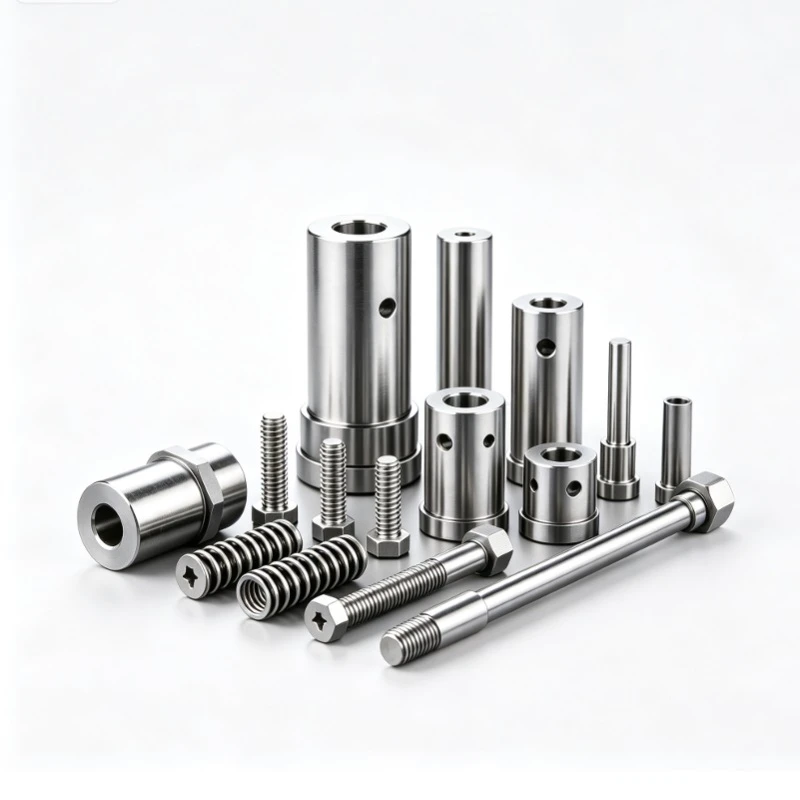
Material purity plays a crucial role in chemical resistance. Impurities in the material can react with these chemicals, causing corrosion or degradation of the component. A high - purity material is more likely to be chemically stable and resistant to these reactions. For example, in the production of injection mold bases used in the food industry, we use high - purity stainless steel to ensure excellent chemical resistance. Check out our Injection Mold Base for more details on these corrosion - resistant components.
Manufacturing Processes and Material Purity
The purity of the material can also affect the manufacturing processes of precision mold components. Machining is one of the most common processes used in the production of these components. High - purity materials are generally easier to machine because they have more consistent properties.
For example, when we're cutting or drilling a high - purity metal, the tool is less likely to encounter sudden changes in hardness or other properties. This can lead to smoother machining operations, better tool life, and higher - quality finished parts.
Heat treatment is another important manufacturing process. The purity of the material can influence the outcome of heat treatment. A material with impurities might not respond to heat treatment in the same way as a high - purity material. This can result in inconsistent properties and reduced performance of the final component.
Cost - Benefit Analysis
Now, I know what you're thinking. Using high - purity materials probably costs more, right? Well, it's true that high - purity materials can be more expensive upfront. However, when you consider the long - term benefits, it's often a worthwhile investment.
High - purity materials can lead to higher - quality components with better performance and longer lifespan. This means fewer replacements, less downtime, and ultimately, lower costs in the long run. For example, a mold component made from a high - purity material might last two or three times longer than a component made from a lower - purity material. This can result in significant savings over time, especially for high - volume production.
Conclusion and Call to Action
So, as you can see, the impact of material purity on precision mold components is huge. From physical and mechanical properties to surface finish and chemical resistance, every aspect of the component's performance is affected by the purity of the material used.
At our company, we're committed to using high - purity materials to produce the best possible Precision Mold Components. We understand the importance of quality and performance in the industry, and we strive to meet and exceed your expectations.
If you're in the market for precision mold components, whether it's Mould Standard Parts or Injection Mold Components, we'd love to have a chat. We can discuss your specific requirements and offer you the best solutions for your needs. Don't hesitate to reach out and start a conversation about your procurement.
References
- Smith, J. (20XX). "The Role of Material Purity in Precision Manufacturing." Journal of Manufacturing Science, Volume XX.
- Johnson, A. (20XX). "Impact of Impurities on Mold Component Performance." Precision Engineering Quarterly, Issue XX.