

In the realm of manufacturing, precision mold components play a pivotal role in ensuring the quality, efficiency, and precision of various production processes. As a leading supplier of Precision Mold Components, I have witnessed firsthand the diverse range of these components and their significance in different industries. In this blog, I will delve into the different types of precision mold components, exploring their functions, applications, and the benefits they offer.
1. Mold Bases
Mold bases are the foundation of any precision mold. They provide a stable structure for mounting other mold components and ensure proper alignment during the molding process. Injection Mold Base is a common type of mold base used in injection molding, which is widely employed in the production of plastic parts.
- Function: Mold bases serve as a framework that holds the cavity and core inserts, as well as other components such as ejector systems and cooling channels. They are designed to withstand the high pressures and temperatures generated during the molding process.
- Applications: Injection mold bases are used in a variety of industries, including automotive, consumer goods, electronics, and medical devices. They are suitable for producing parts with complex shapes and high precision requirements.
- Benefits: Using a high - quality mold base can improve the overall performance and longevity of the mold. It ensures consistent part quality, reduces the risk of mold damage, and facilitates easy maintenance and repair.
2. Cavity and Core Inserts
Cavity and core inserts are the key components that define the shape and size of the molded part. They are typically made from high - quality tool steels or other materials with excellent wear resistance and thermal properties.
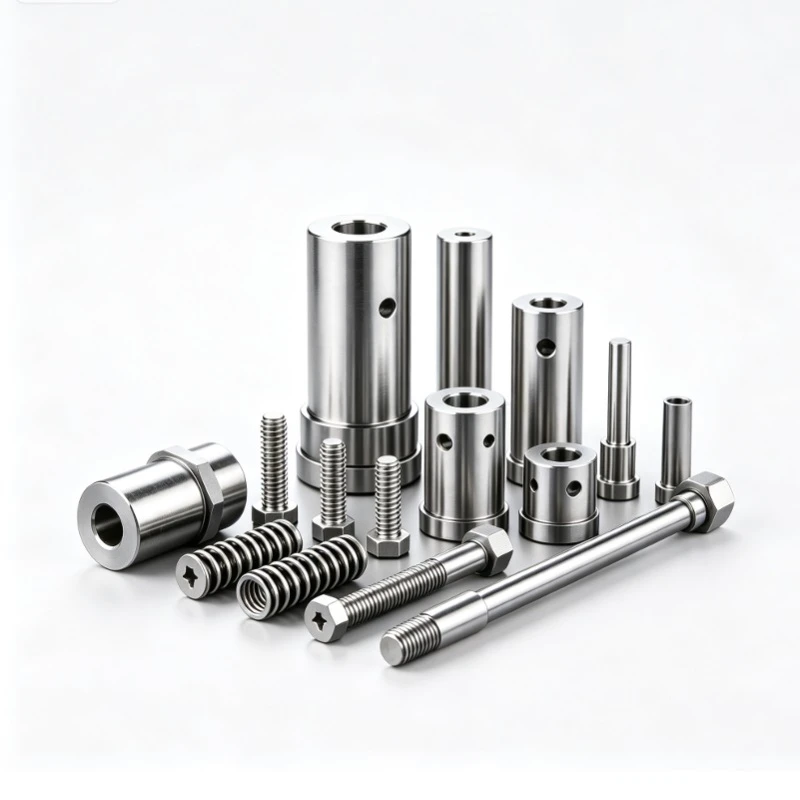

- Function: The cavity insert forms the outer shape of the part, while the core insert creates the internal features. These inserts are machined with high precision to ensure accurate replication of the part design.
- Applications: Cavity and core inserts are used in all types of molding processes, including injection molding, compression molding, and blow molding. They are essential for producing parts with intricate details and high surface finish.
- Benefits: Precision - machined cavity and core inserts can significantly improve the quality of the molded parts. They reduce the need for post - processing, such as machining or polishing, and enhance the productivity of the molding process.
3. Ejector Systems
Ejector systems are responsible for removing the molded part from the mold after the molding process is complete. They play a crucial role in ensuring smooth and efficient part ejection.
- Function: Ejector pins, ejector sleeves, and ejector plates are common components of an ejector system. Ejector pins push the part out of the mold cavity, while ejector sleeves provide support and guidance for the pins. Ejector plates transfer the force from the molding machine to the ejector pins.
- Applications: Ejector systems are used in injection molding, die - casting, and other molding processes. They are particularly important for parts with complex shapes or undercuts that require a reliable ejection mechanism.
- Benefits: A well - designed ejector system can prevent part damage during ejection, reduce cycle times, and improve the overall efficiency of the molding process. It also allows for the production of parts with high precision and repeatability.
4. Cooling Channels
Cooling channels are essential for controlling the temperature of the mold during the molding process. Proper cooling can significantly improve the quality and productivity of the molded parts.
- Function: Cooling channels circulate a cooling medium, such as water or oil, through the mold to remove heat generated during the molding process. This helps to solidify the molten plastic or metal quickly and evenly, reducing the cycle time and preventing part warping.
- Applications: Cooling channels are used in injection molding, die - casting, and other high - temperature molding processes. They are crucial for producing parts with consistent dimensions and high surface quality.
- Benefits: Effective cooling can improve the mechanical properties of the molded parts, reduce the risk of defects such as shrinkage and sink marks, and increase the production rate. It also extends the life of the mold by reducing thermal stress.
5. Hot Runner Systems
Hot runner systems are used in injection molding to keep the plastic melt in a molten state from the injection unit to the mold cavity. They offer several advantages over cold runner systems.
- Function: Hot runner systems consist of a manifold, nozzles, and heaters. The manifold distributes the molten plastic to the individual nozzles, which inject the plastic into the mold cavity. The heaters maintain the temperature of the plastic melt to ensure smooth flow.
- Applications: Hot runner systems are commonly used in the production of high - volume, high - quality plastic parts, such as automotive components, electronic devices, and medical products.
- Benefits: Hot runner systems eliminate the need for runner scrap, reduce cycle times, and improve part quality. They also allow for more precise control of the plastic flow, resulting in better part consistency and reduced production costs.
6. Mould Standard Parts
Mould standard parts are pre - manufactured components that are widely used in mold making. They offer a cost - effective and time - saving solution for mold designers and manufacturers.
- Function: Mould standard parts include items such as guide pins, bushings, screws, and springs. They are used to ensure proper alignment, support, and movement of the mold components.
- Applications: Mould standard parts are used in all types of molds, regardless of the molding process or the industry. They are essential for maintaining the quality and reliability of the mold.
- Benefits: Using mould standard parts can reduce the design and manufacturing time of the mold, lower the production cost, and improve the interchangeability of the mold components. They also provide a high level of quality and consistency.
7. Precision Mould Parts
Precision mould parts are components that require high - precision machining and tight tolerances. They are used in molds for producing parts with extremely high accuracy and quality.
- Function: Precision mould parts include items such as inserts, sliders, and lifters. They are designed to perform specific functions in the mold, such as creating complex shapes or providing additional support.
- Applications: Precision mould parts are used in industries where high - precision parts are required, such as aerospace, medical, and electronics. They are essential for producing parts with tight dimensional tolerances and high surface finish.
- Benefits: Precision mould parts can significantly improve the quality and performance of the molded parts. They allow for the production of parts with complex geometries and high precision, which is crucial for many high - tech applications.
8. Injection Mold Components
Injection mold components are a comprehensive set of parts used in injection molding processes. They include all the components mentioned above, as well as other specialized parts.
- Function: Injection mold components work together to ensure the smooth and efficient operation of the injection molding process. They are designed to withstand the high pressures and temperatures involved in injection molding and to produce high - quality plastic parts.
- Applications: Injection mold components are used in a wide range of industries, from consumer goods to automotive and aerospace. They are suitable for producing parts of various sizes and shapes, from small electronic components to large automotive body panels.
- Benefits: Using high - quality injection mold components can improve the productivity, quality, and cost - effectiveness of the injection molding process. They reduce the risk of defects, increase the production rate, and extend the life of the mold.
As a supplier of precision mold components, I understand the importance of providing high - quality products and excellent customer service. Whether you are a mold maker, a manufacturer, or an engineer, I am here to assist you in selecting the right components for your specific needs. If you are interested in learning more about our products or would like to discuss a potential project, please feel free to contact us. We look forward to the opportunity to work with you and help you achieve your manufacturing goals.
References
- Throne, J. L. (2013). Plastics Process Engineering. CRC Press.
- Rosato, D. V., & Rosato, D. V. (2000). Injection Molding Handbook. Springer.
- Mallick, P. K. (2008). Composites Engineering Handbook. CRC Press.